
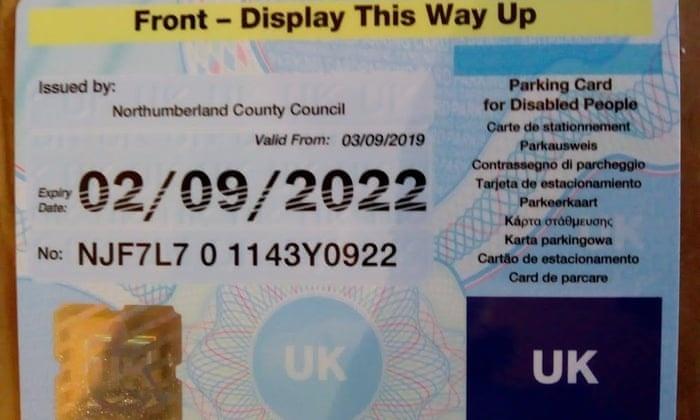

You can use a UK Blue Badge in many European countries, but there is no single worldwide Blue Badge agreement. Recognition depends on the country and, in some destinations, the region or local authority.
As of 2026, the UK government confirms recognition in countries including France, Germany, Ireland, Portugal, the Netherlands, Belgium, Austria, Finland, Sweden, Norway, Denmark and Switzerland.
However, there are important exceptions:
- Spain: recognition is currently decided by local administrations.
- Italy: non-EU disabled parking cards are accepted in some regions only.
- USA, Canada, Australia and New Zealand: there is no current national arrangement guaranteeing use of a UK Blue Badge, although local authorities may recognise it.
Even where your UK Blue Badge is recognised, the UK parking rules do not travel with you. You must follow the parking rules of the country, city and car park you are visiting.
UK Blue Badge recognition by country
The table below summarises the countries covered by our international Blue Badge guides.
| Country | UK Blue Badge status | What you should know |
|---|---|---|
| France | ✅ Recognised | Follow French disabled-parking and local rules. |
| Germany | ✅ Recognised | German parking concessions and restrictions apply. |
| Italy | ⚠️ Partial | Non-EU parking cards are accepted in some regions only. |
| Portugal | ✅ Recognised | Check Portuguese and local parking rules. |
| Ireland | ✅ Recognised | Irish disabled-parking rules apply. |
| Netherlands | ✅ Recognised | Local parking conditions can vary. |
| Belgium | ✅ Recognised | Check regional and municipal parking requirements. |
| Sweden | ✅ Recognised | Swedish parking concessions and local restrictions apply. |
| Norway | ✅ Recognised | Check Norwegian and local parking rules. |
| Denmark | ✅ Recognised | A parking disc is required when using parking-time concessions. |
| Switzerland | ✅ Recognised | A parking disc is required when using parking-time concessions. |
| Austria | ✅ Recognised | Follow Austrian parking and local-access rules. |
| Finland | ✅ Recognised | Finnish parking rules apply. |
| Spain | ⚠️ Local recognition | Recognition is decided by local administrations, including in the Balearic and Canary Islands. |
| Canada | ⚠️ No UK-wide arrangement | Check the province and local parking authority before travelling. |
| Australia | ⚠️ No national arrangement | Recognition and visitor permits can depend on the state or territory. |
| New Zealand | ⚠️ No UK-New Zealand arrangement | Check current visitor and local mobility-parking rules. |
| United States | ⚠️ No national arrangement | Disabled-parking recognition is governed at state and local level. |
Important: “Recognised” does not mean that UK parking rules apply abroad. It means the UK Blue Badge is recognised for use under the destination’s disabled-parking system, subject to its own rules and restrictions.
Which European countries recognise a UK Blue Badge?
The UK Department for Transport maintains an official country-by-country table for Europe.
As of its latest 2026 guidance, the UK Blue Badge is explicitly listed as recognised in:
- Austria;
- Belgium;
- Croatia;
- Cyprus;
- Czech Republic;
- Denmark;
- Estonia;
- Finland;
- France;
- Germany;
- Hungary;
- Ireland;
- Latvia;
- Liechtenstein;
- Malta;
- Netherlands;
- Norway;
- Poland;
- Portugal;
- Slovakia;
- Sweden;
- and Switzerland.
The government table also states that Greece, Iceland, Luxembourg and Romania accept non-EU parking cards.
Other destinations have more complicated rules:
- Italy: non-EU parking cards are accepted in some regions only.
- Lithuania: non-EU parking cards are accepted in some regions only.
- Spain: recognition is decided by local administrations.
- Slovenia: a non-EU-issued parking card may not be recognised.
- Bulgaria: GOV.UK currently lists no information on recognition.
For the latest official status, use the GOV.UK guide to using a Blue Badge in Europe.
What does “Blue Badge recognised” actually mean?
This distinction is important.
If GOV.UK lists a country as recognising the UK Blue Badge, it does not mean you receive every parking concession available in the UK.
Instead, you must follow the rules that apply to disabled parking in the country you are visiting.
Those rules may differ on:
- where you can park;
- whether parking is free;
- how long you can stay;
- whether a parking disc is required;
- whether you can park on restricted streets;
- whether the badge must be accompanied by another notice;
- city-centre access restrictions;
- private car parks;
- and whether registration with a local authority is needed.
Rules may even vary between cities or regions within the same country.
Is a reciprocal Blue Badge agreement the same as recognition?
Not necessarily.
People often search for “reciprocal Blue Badge agreements”, but international recognition does not always result from one formal bilateral agreement between the UK and another country.
The more useful question is:
Will the destination recognise my UK Blue Badge, and what parking concessions will it give me there?
That is why GOV.UK describes its guidance primarily in terms of whether a country recognises the UK Blue Badge.
Can I use a UK Blue Badge in France?
Yes. GOV.UK currently lists France as recognising the UK Blue Badge.
However, you must follow French disabled-parking rules rather than UK Blue Badge rules.
See our complete guide to using a UK Blue Badge in France.
Can I use a UK Blue Badge in Germany?
Yes. Germany is listed by GOV.UK as recognising the UK Blue Badge.
German parking signs, restrictions and local requirements still apply.
See using your Blue Badge in Germany.
Can I use my Blue Badge in Spain?
Do not assume that recognition is uniform across Spain.
The current GOV.UK guidance says that UK Blue Badge recognition across Spain is decided by local administrations.
This includes:
- mainland Spain;
- the Balearic Islands;
- and the Canary Islands.
The UK government also states that it is working with Spain to ensure mutual recognition of disabled-parking permits.
You should therefore check the rules of the municipality or local authority you are visiting before relying on your badge.
See our updated guide to using a Blue Badge in Spain.
Can I use my Blue Badge in Italy?
Recognition is not uniform across Italy.
GOV.UK states that non-EU parking cards are accepted in some regions only.
There can also be separate local rules governing:
- disabled parking;
- city-centre access;
- restricted traffic zones;
- vehicle registration;
- and local permits.
Never assume that using the badge successfully in one Italian city means it will be treated identically elsewhere.
See using a UK Blue Badge in Italy.
Do I need a parking disc abroad?
Sometimes.
GOV.UK specifically states that:
- Denmark requires a parking disc when using parking-time concessions;
- Switzerland also requires a parking disc when using parking-time concessions.
See:
Do not assume your UK Blue Badge clock automatically satisfies another country’s parking-disc requirements. Check what type of disc or time display is required locally.
Can I use my UK Blue Badge in the United States?
There is no current UK-US national arrangement guaranteeing that a UK Blue Badge can be used throughout the United States.
Parking permits for disabled people are largely governed by state and local rules.
Some authorities may recognise a foreign disability parking permit, while others may require a temporary visitor permit or another form of authorisation.
Check the rules for the state and city where you will actually park.
See is my UK Blue Badge valid in the United States?
Can I use my UK Blue Badge in Canada?
There is no current UK-Canada nationwide arrangement guaranteeing recognition of the Blue Badge.
Parking rules and disabled-parking permits are administered provincially and locally, so the answer can depend on where in Canada you are visiting.
See using a UK Blue Badge in Canada.
Can I use my UK Blue Badge in Australia?
There is no current national UK-Australia arrangement guaranteeing use of a UK Blue Badge.
Australia’s disabled-parking systems involve state and territory authorities, so visitors should check the rules for their specific destination.
See using a UK Blue Badge in Australia.
Can I use my UK Blue Badge in New Zealand?
There is no current UK-New Zealand national arrangement guaranteeing use of the UK Blue Badge.
You should check the visitor and mobility-parking requirements that apply to your destination before travelling.
See using a UK Blue Badge in New Zealand.
Does “no formal arrangement” mean my badge will definitely be refused?
No.
This is an important distinction for countries such as the USA, Canada, Australia and New Zealand.
UK government guidance says there are no current arrangements for using the Blue Badge in these countries, but also notes that authorities there may be prepared to recognise it.
Therefore, do not assume either:
- that your badge is automatically valid;
- or that it will automatically be rejected.
Instead, check with the relevant:
- state;
- province;
- territory;
- municipality;
- transport authority;
- or parking operator.
Should I carry a translation of my Blue Badge?
It can be useful, but it is not a universal requirement for every country.
GOV.UK recommends carrying any supporting documentation that may be required, particularly when travelling somewhere with stricter parking rules.
This could include:
- a translation of your Blue Badge;
- a doctor’s note;
- other evidence of disability where specifically requested;
- or information required by a local visitor-permit scheme.
Check the destination’s requirements rather than assuming every traveller needs the same documents.
Will my UK parking concessions apply abroad?
No.
Your Blue Badge does not export the UK parking rules to another country.
For example, you should never assume that a concession allowing parking on a particular type of UK road automatically gives you an equivalent right abroad.
Always check:
- disabled-bay signs;
- road markings;
- time limits;
- parking charges;
- permit zones;
- pedestrian areas;
- loading restrictions;
- low-emission or restricted-access zones;
- and local enforcement rules.
What about private car parks abroad?
Recognition of your Blue Badge by a country does not necessarily mean a privately operated car park must give you free parking or the same concessions as public parking.
Hotels, airports, shopping centres, hospitals, attractions and private parking operators may have their own rules.
Check:
- whether a tariff applies;
- whether you must register your number plate;
- whether the badge must be shown at reception;
- whether accessible spaces need to be booked;
- and whether there is a maximum stay.
Has Brexit affected Blue Badge recognition abroad?
The UK Blue Badge should no longer be treated as though one uniform EU-wide rule automatically applies to it.
GOV.UK now tells travellers to check country by country whether the UK-issued badge is recognised.
The current status varies:
- many European countries explicitly recognise it;
- some accept non-EU disabled parking cards;
- some have partial or regional recognition;
- and Spain currently leaves recognition to local administrations.
This makes checking current official guidance particularly important before each trip.
How to check your destination before travelling
Before leaving the UK:
- Check whether the country recognises the UK Blue Badge.
- Read the country’s disabled-parking rules.
- Check the city or municipality you are visiting.
- Look for parking-disc or local-notice requirements.
- Check restricted traffic or environmental zones.
- Check private car parks separately.
- Carry any supporting documents that may be required.
- Make sure your Blue Badge remains valid for the whole journey.
If your badge is close to expiring, see how to renew your Blue Badge before travelling.
Planning a multi-country road trip?
Recognition can change every time you cross a border.
For example, a journey through:
France → Spain → Portugal
involves three different parking systems, and Spain has a different recognition position from France and Portugal.
A route through:
France → Germany → Austria → Italy
also requires extra care because Italy does not have uniform nationwide recognition of non-EU parking cards.
For route planning, documents, rental cars, parking discs, restricted zones and cross-border checks, see how to plan an international road trip with your Blue Badge.
Popular country guides
- Can I use my Blue Badge in Spain?
- Can I use my Blue Badge in France?
- Can I use my Blue Badge in Germany?
- Can I use my Blue Badge in Italy?
- Can I use my Blue Badge in Portugal?
- Can I use my Blue Badge in Ireland?
- Can I use my Blue Badge in Australia?
- Is my Blue Badge valid in the United States?
Official guidance
- GOV.UK — Using a Blue Badge in Europe
- GOV.UK — Blue Badge rights and responsibilities, including travelling abroad
- nidirect — Using a Blue Badge abroad
The bottom line
A UK Blue Badge can be used in many European countries, but there is no single global recognition rule.
France, Germany, Ireland, Portugal, the Netherlands, Belgium, Sweden, Norway, Denmark, Switzerland, Austria and Finland are among the countries that currently recognise it.
Spain requires particular care because recognition is decided by local administrations, while Italy accepts non-EU disabled-parking cards only in some regions.
For the United States, Canada, Australia and New Zealand, there is no current national arrangement guaranteeing recognition. That does not necessarily mean every local authority will refuse the badge, so check the specific destination before travelling.
Wherever you go, remember the most important rule: recognition of the badge does not mean UK parking rules apply abroad. Always check current local parking regulations before you park.
Frequently asked questions
Can I use my UK Blue Badge abroad?
Yes, in many countries, particularly in Europe. However, recognition varies by destination and local parking rules apply. Some countries have partial or locally determined recognition, while countries such as the USA, Canada, Australia and New Zealand have no current national arrangement guaranteeing recognition.
Which countries recognise the UK Blue Badge?
GOV.UK currently lists countries including France, Germany, Ireland, Portugal, the Netherlands, Belgium, Austria, Finland, Sweden, Norway, Denmark and Switzerland as recognising the UK Blue Badge. Several other European countries also recognise it or accept non-EU disabled parking cards.
Is the UK Blue Badge valid in Europe after Brexit?
It is recognised in many European countries, but there is no single uniform rule covering all of Europe. You should check the official recognition status and local parking rules for every country you visit.
Can I use my Blue Badge in Spain?
Recognition across Spain is currently decided by local administrations, including in the Balearic and Canary Islands. Check the municipality or local authority you are visiting before relying on your UK Blue Badge.
Can I use my Blue Badge in Italy?
Not uniformly across the country. GOV.UK states that non-EU parking cards are accepted in some Italian regions only, so check the rules for the region and city you are visiting.
Can I use my Blue Badge in the USA?
There is no current national UK-US arrangement guaranteeing recognition. Disabled-parking rules are largely controlled by state and local authorities, so check the requirements for your destination.
Can I use my Blue Badge in Canada?
There is no current nationwide UK-Canada arrangement guaranteeing recognition. Check the rules of the province, municipality and parking authority where you plan to park.
Can I use my Blue Badge in Australia?
There is no current national arrangement guaranteeing use of a UK Blue Badge throughout Australia. Visitor rules can depend on the state or territory.
Can I use my Blue Badge in New Zealand?
There is no current UK-New Zealand national arrangement guaranteeing recognition. Check the current visitor mobility-parking requirements before travelling.
Which countries require a parking disc with a UK Blue Badge?
GOV.UK specifically states that Denmark and Switzerland require a parking disc when using parking-time concessions. Other destinations may also have local display requirements, so always check current local rules.
Do UK Blue Badge parking rules apply abroad?
No. The badge may be recognised, but the parking concessions and restrictions are those of the country and locality you are visiting.
Should I take a translation of my Blue Badge abroad?
It can be useful. GOV.UK recommends carrying supporting documentation that may be required, such as a doctor’s note or translation of the Blue Badge, particularly in destinations with stricter parking rules.
Does no formal Blue Badge agreement mean my badge will definitely be refused?
No. GOV.UK says countries such as the USA, Canada, Australia and New Zealand have no current arrangement for use of the badge, but local authorities may still be prepared to recognise it. Check the specific authority before travelling.
[…] badge is valid for your whole trip — see how to renew your Blue Badge. For the wider picture, see which countries honour the UK Blue Badge scheme and our guide to planning an international road […]
[…] your trip — see how to renew your Blue Badge. For the full country-by-country list, see which countries honour the UK Blue Badge scheme, plus our guide to planning an international road […]
[…] valid for your trip — see how to renew your Blue Badge. For the full list of destinations, see which countries honour the UK Blue Badge scheme, and if you’re driving further afield, our guide to planning an international road […]
[…] your badge stays valid throughout — see how to renew your Blue Badge. For the full picture, see which countries honour the UK Blue Badge scheme and our guide to planning an international road […]
[…] your badge stays valid throughout — see how to renew your Blue Badge. For the full picture, see which countries honour the UK Blue Badge scheme and our guide to planning an international road […]
[…] your badge stays valid throughout — see how to renew your Blue Badge. For the full picture, see which countries honour the UK Blue Badge scheme and our guide to planning an international road […]
[…] your badge stays valid throughout — see how to renew your Blue Badge. For the full picture, see which countries honour the UK Blue Badge scheme and our guide to planning an international road […]
[…] your badge stays valid throughout — see how to renew your Blue Badge. For the full picture, see which countries honour the UK Blue Badge scheme and our guide to planning an international road […]
[…] your badge stays valid throughout — see how to renew your Blue Badge. For the full picture, see which countries honour the UK Blue Badge scheme and our guide to planning an international road […]
[…] your badge stays valid throughout — see how to renew your Blue Badge. For the full picture, see which countries honour the UK Blue Badge scheme and our guide to planning an international road […]
[…] your badge stays valid throughout — see how to renew your Blue Badge. For the full picture, see which countries honour the UK Blue Badge scheme and our guide to planning an international road […]
[…] your badge stays valid throughout — see how to renew your Blue Badge. For the full picture, see which countries honour the UK Blue Badge scheme and our guide to planning an international road […]
[…] your badge stays valid throughout — see how to renew your Blue Badge. For the full picture, see which countries honour the UK Blue Badge scheme and our guide to planning an international road […]
[…] guidance, so recognition rules differ entirely. For destinations that do recognise the badge, see which countries honour the UK Blue Badge scheme, and for trip planning, our guide to planning an international road trip. Make sure your UK badge […]
[…] guidance, so recognition rules differ entirely. For destinations that do recognise the badge, see which countries honour the UK Blue Badge scheme, and for trip planning, our guide to planning an international road trip. Keep your UK badge valid […]
[…] guidance, so recognition rules differ entirely. For destinations that do recognise the badge, see which countries honour the UK Blue Badge scheme, and for trip planning, our guide to planning an international road trip. Keep your UK badge valid […]
[…] guidance, so recognition rules differ entirely. For destinations that do recognise the badge, see which countries honour the UK Blue Badge scheme, and for trip planning, our guide to planning an international road trip. Keep your UK badge valid […]