
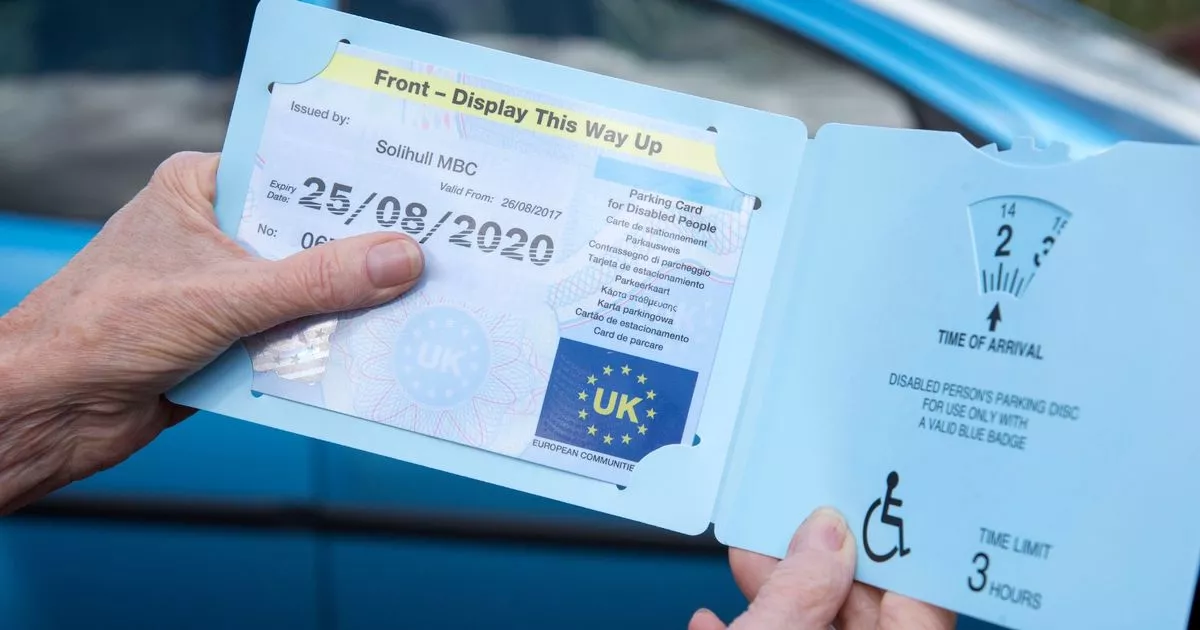

Yes, arthritis can qualify you for a Blue Badge if pain, stiffness or other symptoms cause severe and lasting difficulty walking. However, arthritis does not automatically qualify you simply because you have been diagnosed with osteoarthritis, rheumatoid arthritis or another form of the condition.
The key question is how arthritis affects your mobility in everyday life. Someone who can only walk a short distance because of severe knee or hip pain may have a strong case, while another person with arthritis who can walk normally may not meet the criteria.
Factors such as your walking distance, pain, speed, need to stop, walking aids and the frequency of difficult days can all be relevant.
Arthritis is one of many conditions that can potentially support eligibility. See our main guide to what illnesses and disabilities can qualify for a Blue Badge for the wider rules.
Does arthritis qualify you for a Blue Badge?
Potentially, yes — but there is no automatic Blue Badge category for arthritis.
Arthritis can cause pain, swelling, stiffness and difficulty moving affected joints. When the hips, knees, ankles, feet or spine are affected, these symptoms can have a significant effect on walking.
You may have a stronger case if arthritis means you:
- can only walk a short distance before severe pain forces you to stop;
- walk much more slowly than someone without a mobility impairment;
- need frequent stops while walking;
- need a stick, crutches, frame or another person’s assistance;
- have significant problems with balance or stability;
- experience substantial pain during or after walking;
- have difficulty walking outdoors on slopes, kerbs or uneven surfaces;
- or experience frequent flare-ups that substantially restrict your mobility.
The diagnosis itself is therefore only part of the evidence. Your application needs to show how severely the arthritis affects your ability to get from a vehicle to your destination.
Can osteoarthritis qualify for a Blue Badge?
Yes, severe osteoarthritis can potentially qualify.
Osteoarthritis is the most common type of arthritis in the UK. It causes joints to become painful and stiff and commonly affects the:
- knees;
- hips;
- hands;
- and other joints.
For Blue Badge purposes, osteoarthritis of the hips or knees can be particularly relevant because these joints directly affect walking.
For example, severe knee osteoarthritis may mean you:
- experience significant pain with each step;
- have difficulty walking up or down slopes;
- walk slowly because the joint is stiff;
- feel that the knee may give way;
- or need a walking aid.
Hip osteoarthritis may cause similar problems with walking and can also make getting in and out of a vehicle difficult.
If your arthritis has progressed to the point where joint replacement is being considered, you may also want to read whether hip replacement can qualify for a Blue Badge.
Can rheumatoid arthritis qualify for a Blue Badge?
Yes, rheumatoid arthritis can also potentially qualify where it causes sufficiently severe mobility problems.
Rheumatoid arthritis is a long-term autoimmune condition that can cause:
- joint pain;
- swelling;
- stiffness;
- reduced joint movement;
- fatigue;
- and periods where symptoms become worse, known as flares.
The impact can be particularly significant if the condition affects the feet, ankles, knees or hips.
Rheumatoid arthritis can also fluctuate considerably, so explaining the frequency and severity of your flares can be important.
What does the Blue Badge assessment look at?
Where your application is based on physical walking difficulties, the authority is interested in what actually happens when you walk.
Relevant factors can include:
| Factor | What to explain |
|---|---|
| Walking distance | How far you can realistically walk before pain or another symptom forces you to stop |
| Pain | How severe the pain becomes during or after walking |
| Walking speed | Whether arthritis makes you walk unusually slowly |
| Time | How long you can continue walking and how long short journeys take |
| Stops | How often you stop and how long you need to recover |
| Walking aids | Whether you need a stick, crutches, frame, rollator or another person’s help |
| Walking pattern | Whether pain affects your gait, balance, stride or stability |
| Outdoor mobility | How you manage kerbs, slopes, uneven ground and typical outdoor journeys |
How far do you need to be able to walk?
There is no single UK-wide walking distance that automatically decides a Blue Badge application.
However, the official Department for Transport guidance used in England provides useful benchmarks.
When considering very considerable difficulty walking:
- if you are unable to walk 30 metres in total, you can be considered to have very considerable difficulty walking;
- if you can walk between 30 and 80 metres, you may still qualify where other factors such as severe pain, extremely slow walking or an abnormal manner of walking demonstrate very considerable difficulty;
- if you can walk more than 80 metres, other evidence of very considerable walking difficulty would normally be needed.
These figures are England assessment guidance, not a simple UK-wide pass/fail test.
You should never alter your answer to fit a particular distance. Describe what you can genuinely manage.
Can severe arthritis pain qualify?
Yes. Pain is directly relevant to the assessment of walking difficulty.
England’s official Blue Badge guidance specifically identifies:
pain experienced while walking or as a consequence of walking
as a factor that can demonstrate very considerable difficulty.
This means the pain does not necessarily have to disappear when you stop walking.
If walking causes your arthritis pain to remain severe afterwards, explain:
- when the pain starts;
- how severe it becomes;
- how far you have walked at that point;
- how long it takes to settle;
- and whether the pain prevents you completing another part of the journey.
For example:
“I can normally walk around 35 metres before the pain in my knees becomes severe. I then have to stop and the increased pain normally lasts for at least 20 minutes afterwards.”
Specific examples are much more useful than simply writing “arthritis causes a lot of pain”.
Does walking slowly matter?
Yes.
A person may technically be capable of walking a particular distance but take much longer than someone without a disability.
In England, the Department for Transport uses the following walking speeds as guidance:
- more than 90 metres per minute: brisk;
- 61 to 90 metres per minute: normal;
- 40 to 60 metres per minute: slow;
- less than 40 metres per minute: very slow.
If you cannot walk 40 metres in one minute, including any stops to rest, the guidance considers this an extremely slow pace that can be relevant to whether walking is very difficult.
Again, walking speed is only one factor and should not be treated as a standalone test.
Does using a walking stick automatically qualify?
No.
Using a stick, crutches, frame or rollator can be important evidence, but the use of a mobility aid does not automatically qualify someone for a Blue Badge.
The authority can consider:
- why you use the aid;
- how often you need it;
- how far you can walk even with the aid;
- whether walking remains severely painful;
- and whether the aid substantially improves your mobility.
For example, someone who walks almost normally with a stick may be assessed differently from someone who still walks only a very short distance, very slowly and in severe pain despite using one.
What if your arthritis flares up?
Arthritis symptoms do not always remain the same.
Osteoarthritis symptoms can come and go, while rheumatoid arthritis commonly causes periods where symptoms become significantly worse.
You should explain the overall pattern rather than only describing your worst day.
Record:
- how often severe days occur;
- how long a typical flare lasts;
- how far you can walk during a flare;
- what you can manage on better days;
- whether you need additional walking aids during flares;
- and how much of a typical week or month is affected.
In England, Department for Transport guidance says it can be reasonable for authorities to consider whether the required level of difficulty occurs more often than not.
This is much more accurate than presenting only an unusually severe “worst day”.
Should you keep a walking diary?
A short diary can be useful if your symptoms vary or you find it difficult to estimate distances when completing the form.
For one or two representative weeks, you could record:
| What to record | Example |
|---|---|
| Distance | 40 metres before stopping |
| Time | About 2 minutes including rest |
| Pain | Severe knee pain after approximately 30 metres |
| Stops | Two stops between the car and supermarket |
| Aid | Walking stick used throughout |
| Recovery | Needed to sit for 10 minutes afterwards |
| Flare | Knee swelling and stiffness significantly worse today |
The purpose is not to create perfect measurements. It is to help you describe your real mobility consistently and accurately.
Do you automatically qualify through PIP?
You may qualify automatically if you receive a qualifying disability benefit.
For arthritis, the most relevant PIP route is often the “moving around” activity.
Receiving 8 points or more for PIP “moving around” can provide automatic Blue Badge eligibility.
This corresponds to PIP awards where your physical mobility is sufficiently restricted.
The rules for other PIP mobility descriptors vary between England, Scotland, Wales and Northern Ireland, so see our dedicated guide to getting a Blue Badge on PIP for the full UK breakdown.
Can you get a Blue Badge for arthritis without PIP?
Yes.
You do not need to receive PIP to apply for a Blue Badge.
If you do not automatically qualify through a benefit, you may still qualify under the assessed eligibility criteria.
The precise rules vary across the UK.
England
In England, an applicant subject to further assessment can qualify where an enduring and substantial disability causes them to:
- be unable to walk;
- experience very considerable difficulty while walking;
- or meet another qualifying journey or serious-harm criterion.
For this route, “enduring” means expected to last for at least three years.
Severe, long-term arthritis can therefore fit this route where the actual walking difficulty meets the required threshold.
Scotland
In Scotland, people who do not automatically qualify can still apply if they:
- cannot walk;
- or find walking very difficult.
The local council assesses the application.
Wales
In Wales, a person may qualify where they have a permanent and substantial disability that means they are unable to walk or have considerable difficulty walking.
Factors such as walking aids, excessive pain, distance and other mobility evidence can be considered.
Northern Ireland
Northern Ireland has its own scheme. One relevant route covers people with a permanent disability that means they cannot walk or have a lot of difficulty walking.
What evidence should you provide for arthritis?
The strongest evidence does more than confirm that you have arthritis.
Useful evidence may include:
- rheumatology or orthopaedic clinic letters;
- your GP medical summary;
- physiotherapy or occupational therapy reports;
- details of prescribed medication;
- evidence of walking aids;
- information about joint injections, surgery or other treatment;
- records showing significant joint damage where relevant;
- and evidence explaining your functional mobility.
X-rays, scans or blood tests may support the medical diagnosis, but they do not automatically prove Blue Badge eligibility.
Someone can have significant changes visible on an X-ray but relatively good mobility, while another person can experience severe functional difficulty.
The authority ultimately needs to understand what happens when you walk.
What should a medical letter say?
A useful letter or clinical report may confirm:
- which joints are affected;
- how long the condition has affected you;
- your current treatment;
- whether the condition is expected to remain long term;
- your use of mobility aids;
- and any known functional restrictions.
However, do not rely exclusively on a letter saying:
“This patient suffers from severe arthritis.”
The description in your application should still explain your own walking distance, pain, speed, stops and day-to-day difficulties.
What if you have polymyalgia as well?
Include it.
Polymyalgia rheumatica (PMR) can cause pain and stiffness around the hips and shoulders and may add to existing mobility problems.
If both conditions affect you, explain their combined impact rather than trying to attribute every step of your walking difficulty to one diagnosis.
See our guide to getting a Blue Badge for polymyalgia rheumatica.
What if you have osteoporosis as well?
Osteoporosis itself does not automatically qualify either, but fragility fractures, spinal changes, pain or fall risk can add to mobility problems caused by arthritis.
Read Can you get a Blue Badge for osteoporosis?
How to apply for a Blue Badge with arthritis
- Check whether you qualify automatically through PIP or another qualifying category.
- Describe your walking ability, including distance, speed, pain and stops.
- Explain symptom variation, including the frequency of severe days and flares.
- Gather relevant medical and mobility evidence.
- Submit your application through the correct service for where you live.
- Attend an assessment if your issuing authority requests one.
See our complete guide on how to apply for a Blue Badge online.
You can also use our Blue Badge application documents checklist before starting.
What if your arthritis application is refused?
If your application is unsuccessful, read the reasons carefully.
Check whether your original application clearly explained:
- how far you can walk;
- how severe the pain becomes;
- how slowly you walk;
- how frequently you stop;
- how symptoms affect you after walking;
- your use of walking aids;
- the frequency of flares;
- and any other conditions contributing to your mobility problems.
If relevant evidence was overlooked or you have additional evidence, you may be able to ask for reconsideration depending on the process where you live.
See what to do after a Blue Badge refusal.
The bottom line
Arthritis can qualify you for a Blue Badge when it causes sufficiently severe mobility problems, but the diagnosis itself does not guarantee eligibility.
The strongest arthritis applications focus on:
- walking distance;
- pain during and after walking;
- walking speed;
- time spent walking;
- rest stops;
- walking aids;
- outdoor mobility;
- and the frequency of difficult days or flare-ups.
If you qualify automatically through PIP or another benefit, use that route. Otherwise, provide clear evidence of the actual effect arthritis has on your mobility.
And if your condition fluctuates, describe your typical pattern across good and difficult days rather than focusing only on an unusually severe worst day.
Frequently asked questions
Does arthritis automatically qualify you for a Blue Badge?
No. Arthritis is not an automatically qualifying diagnosis. You may qualify automatically through a qualifying disability benefit or after assessment if arthritis causes sufficiently severe walking difficulties.
Can osteoarthritis qualify for a Blue Badge?
Yes, potentially. Severe osteoarthritis affecting the hips, knees or other weight-bearing joints can support an application where pain, stiffness or instability causes very considerable difficulty walking.
Can rheumatoid arthritis qualify for a Blue Badge?
Yes, potentially. Rheumatoid arthritis can cause pain, swelling, stiffness, fatigue and unpredictable flares. Eligibility depends on how seriously these symptoms affect your mobility rather than the diagnosis alone.
How far can you walk and still get a Blue Badge?
There is no single UK-wide distance test. In England, official guidance says someone unable to walk 30 metres in total can be considered to have very considerable difficulty walking. People who can walk 30 to 80 metres may still qualify where other factors demonstrate severe difficulty.
Can arthritis pain after walking count?
Yes. England’s official guidance specifically says pain experienced while walking or as a consequence of walking can be considered. Explain how severe the pain becomes and how long it lasts after you stop.
Does using a walking stick qualify you for a Blue Badge?
Not automatically. A walking stick or other mobility aid is relevant evidence, but the authority considers your overall walking ability, including distance, pain, speed and the difficulty you still experience while using the aid.
What if my arthritis is worse on some days?
Explain how often severe days or flare-ups occur, how long they last and what you can manage on better days. In England, authorities may consider whether the qualifying level of difficulty occurs more often than not.
Can I get a Blue Badge for arthritis without PIP?
Yes. PIP is not required for every Blue Badge. If you do not qualify automatically through a benefit, you may still qualify after assessment if your arthritis causes sufficiently severe mobility problems.
What evidence should I provide for arthritis?
Useful evidence can include rheumatology or orthopaedic letters, physiotherapy records, medication and treatment information, evidence of walking aids and a clear account of your walking distance, pain, speed, rest stops and symptom fluctuations.